Published on Fri Mar 06 2026 00:00:00 GMT+0000 (Coordinated Universal Time) by John Wheeler
SEO vs AEO: Key Differences and When to Use Each
SEO and AEO share a goal (visibility) but they pursue it through fundamentally different means. SEO earns clicks. AEO earns citations.
These aren’t competing strategies. Work on both and they’ll reinforce each other. Think about how AEO builds on top of SEO: the backlinks you earned in SEO are useful when AI platforms use RAG pipelines to run traditional searches and aggregate information. When a search doesn’t happen at all, you surface from training data and answer synthesis.
Core Methodology: What Each One Is Actually Optimizing For
| SEO | AEO | |
|---|---|---|
| Primary target | Search engine ranking algorithms | AI model response generation |
| Success metric | Rankings and click-through traffic | Citations, mentions, AI-sourced referrals |
| Content format | Comprehensive, keyword-rich pages | Direct question-answering structure |
| Key signals | Backlinks, authority, E-E-A-T | Semantic clarity, structured data, entity associations |
| Measurement tools | Google Search Console, rank trackers | GA4 referral filters, brand sentiment audits |
Traditional SEO is a deterministic game. The same keyword produces the same SERP for all users at a given moment. You optimize for a position, you track that position, and you measure success by whether people clicked.
AEO is probabilistic. AI systems synthesize unique responses for each user, drawing from semantic understanding of your content rather than keyword matching. In AEO, you’re trying to appear in the answer. The underlying quality requirement is the same: content that actually helps someone by answering their specific question.
Target Platforms
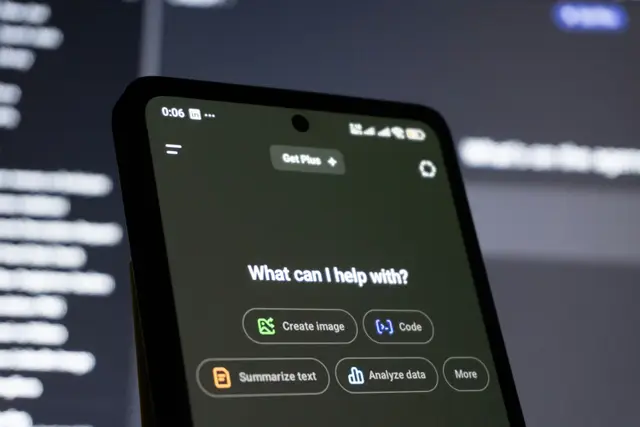
AEO is relevant anywhere users are asking questions of an AI system. Right now, that primarily means:
- ChatGPT (chatgpt.com)
- Claude (claude.ai)
- Perplexity (perplexity.ai)
- Google’s AI tools (Gemini, AI Mode, AI Overviews)
The good news: a unified approach works across all of them. The underlying mechanics differ, but the content principles that make you citation-worthy on Perplexity are the same ones that work on ChatGPT or in a Google AI Overview. Structure your content clearly, answer specific questions directly, and build legitimate authority on your topic. That’s what translates across platforms.
For SEO, you’re still primarily optimizing for Google. For AEO, the target list is longer and growing. Focus on the principles, not the platform-specific quirks.
Content Formatting: The Real Difference in Practice
This is where the two disciplines diverge most clearly in day-to-day execution.
SEO content rewards density. Long-form pages, keyword variation across headings, comprehensive topic coverage, internal linking. The goal is a page that ranks and holds traffic.
AEO content rewards containment. AI systems process content through a chunking process (they’re pulling discrete sections, around 250 words on average, not reading your entire page linearly). That changes how you should write.
The first thing I recommend: think in contained structures, and always be answering a specific question. Each section of your content should stand on its own as a direct answer to a single query.
If you’ve already done SEO work, this is actually an easy translation. Take your keywords and expand them into questions, then answer those questions (one at a time) in a discrete chunk. That might be a paragraph. It might be two sentences and three bullet points. The structure matters less than the containment: one question, one clear answer, self-contained.
Before (SEO-style):
Coffee quality comes down to several factors including bean origin, roast level, and brewing method. Methodical is known for their sourcing relationships with farms in Colombia and Ethiopia, and their roasting philosophy…
After (AEO-style):
What makes Methodical’s coffee different? Methodical sources directly from farms in Colombia and Ethiopia, roasting in small batches to highlight each origin’s distinct flavor profile.
The AEO version answers the question immediately and completely. An AI can chunk it, quote it, or paraphrase it without distortion.
Once you’ve got that foundation, the next layer is semantic triples (simple subject-predicate-object statements that associate your brand with a topic). Example: “Methodical serves high-quality, artisan coffee.” That sentence does real work for AEO because it creates an explicit, machine-readable association between a brand and a category. You don’t need to stuff these in everywhere, but weaving a few into your content is one of the lowest-effort, highest-leverage AEO moves you can make.
Success Metrics and Measurement
SEO measurement is mature: rankings, organic traffic, click-through rates. Most businesses already track these and there are dozens of tools built for it.
AEO measurement is still catching up, but you can get meaningful signal without expensive tooling.
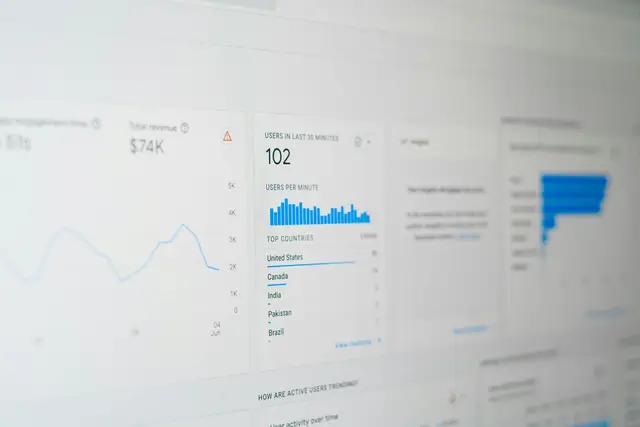
Start with GA4. The free setup that matters most: build a filter for session referrals where the source contains the URL of a major AI platform. You’re looking for traffic from chatgpt.com, claude.ai, perplexity.ai, and Google’s AI tools. When you start tracking this, the only benchmark that matters early is directional (10 referrals last month is good, 15 next month is better). You’re watching the number move, not hitting a target.
Track brand sentiment. Query the major AI platforms directly and ask about your brand, your category, your competitors. What associations are they making? How do they describe you? This is qualitative at first, but it’s the most reliable early signal that your AEO work is landing. A few free tools make this more structured: HubSpot’s AEO Grader, Profound’s free AEO audit, and Webflow’s AEO Maturity Model all give you a starting point. (For transparency: I work at HubSpot. I’ve liked the AEO Grader since before I joined.)
Measure at the right cadence. Check your baseline when you start, then again after six months or a year. Checking too frequently will make it look like nothing is working (AEO results move slowly and the gains are real, they just compound over time).
For deeper SEO measurement foundations, my SEO to-dos for small business owners covers the tracking setup worth having before you layer AEO on top.
When to Prioritize SEO vs AEO
Here’s the practical split.
Lean into SEO first if you’re a brick-and-mortar or local business. Local businesses (restaurants, contractors, wedding photographers) still depend heavily on local search. Google Maps, Google Business Profile, local pack rankings. The good news is that local businesses doing SEO right are already doing part of AEO without realizing it (positive customer reviews are plain-text mentions of your brand that AI systems can read). If you’re a local service business and you haven’t nailed your SEO foundations yet, do that first.
Lean into AEO earlier if you’re in software or services. If your potential customers are the kind of people who open ChatGPT before they open Google (and increasingly, that’s software buyers) then AEO holds more weight. Nobody’s digging through ten ads and ten blue links to figure out which app to download, then cross-referencing Reddit threads and YouTube reviews to confirm. They’re asking AI, and the AI is synthesizing all of that for them. If your brand isn’t part of that synthesis, you’re invisible at exactly the moment someone’s making a decision.
That said: this isn’t a binary choice. SEO work supports AEO. Domain authority still matters for retrieval-augmented generation. Content that ranks well in traditional search is almost always content that performs well in AI citations, because the underlying quality signal is the same. Build both. Just know where to start.
The Mistakes That Actually Cost People
Two failure modes come up constantly when teams decide to “add AEO to their strategy.”
The first is moving too fast. Teams that sprinted to produce listicles and superficial Q&A content are being punished for it now (research from Seer Interactive confirms traffic to low-quality listicle formats has dropped significantly, and here’s confirming research from Josh Blyskal at Profound for good measure). AI systems are getting better at distinguishing genuine expertise from formatted noise. Shortcuts don’t hold.
The second is waiting too long. There are teams out there that have understood content chunking for six months, but are building such a comprehensive, perfectly-structured AEO strategy that they haven’t published anything yet. They’re waiting for perfect when good-and-improving would already be generating gains.
The middle ground is right. Don’t look for hacks. Don’t wait a year to launch a ten-pronged bespoke strategy. Do something solid, measure it, and build on what’s working. As I said in my AEO fundamentals post: doing something in the next six weeks is usually better than doing the “right” thing in six months.
Should I Focus on SEO or AEO?
Both. Always.
AEO is actually easier to get started on if you’re not technically inclined (the content changes are more accessible than the technical side of SEO). SEO has a slightly steeper initial ramp, but AI tools have made it more approachable than it used to be.
The frame I’d encourage: SEO builds the foundation, AEO extends your reach into a new layer of search behavior. Start with the fundamentals, add AEO discipline to your content as you go, and treat them as one unified content strategy going forward.
I’m happy to answer questions or dig deeper on any of this. Connect with me on LinkedIn.
Written by John Wheeler
← Back to blog