Published on Thu Mar 05 2026 00:00:00 GMT+0000 (Coordinated Universal Time) by John Wheeler
What is Answer Engine Optimization (AEO)? Complete Guide
Answer Engine Optimization (AEO) is the practice of optimizing content specifically for AI-powered search engines and chatbots (tools like ChatGPT, Perplexity, and Google’s AI Overviews) to improve your visibility in AI-generated responses and summaries.
AEO Definition and Fundamentals
Traditional search was a matching problem. You targeted a keyword, Google matched it to your page, and a list of blue links appeared.
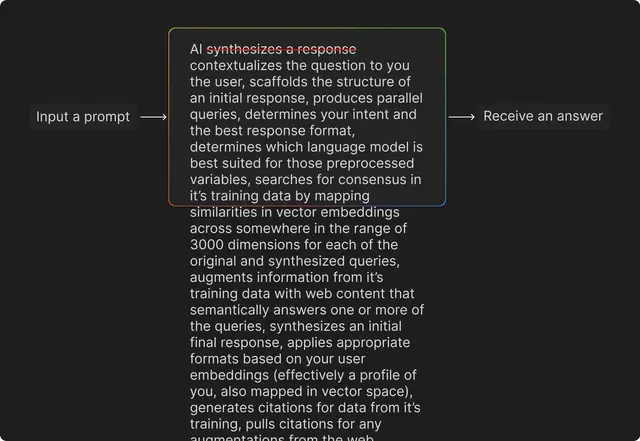
AI-powered search changes how that works. Think of it as replacing something you used to do yourself. The old system gave you 10 blue links, and you’d read, analyze, and distill some kind of learning or answer from those sources. Now that reading and analyzing happens for you, and you just get a synthesized answer. As a writer, you want to shift thinking about ranking for a keyword into becoming an authority on a topic. This helps bridge the gap between keywords and prompts. Keywords are rigid, prompts end up softer and fuzzier around the edges.
The mechanics underneath have shifted too. AI search processes queries through semantic understanding rather than keyword matching. The simple input box hides all of this complexity (a phenomenon I call answer engine obscurity), and that hidden complexity is exactly why so many traditional SEO tactics don’t translate here.
AEO is the practice of making your content legible to these systems. That means optimizing for how AI understands entities, context, and intent, rather than which keywords you’ve packed into a title tag.
AEO vs SEO: Key Differences
SEO and AEO share a foundation: good content, technical hygiene, and legitimate authority still matter. From there, the goals begin to diverge.
Optimization target: SEO optimizes for a position on a results page. AEO adds the need for semantic relevance, you’re not just trying to rank, you’re trying to be the most credible answer to a question so that an AI includes you in a synthesized response (as a citation, a mention, a sourced answer).
Content format: SEO rewards density and structure optimized for crawlers. AEO adds the need for content that works as natural language source material (clear entities, direct answers, and contextual depth that an AI can quote or paraphrase without distortion).
Success metrics: SEO success looks like rankings, organic traffic, and click-through rates. AEO adds AI citations, brand mentions in generated responses, and AI-sourced traffic as meaningful signals. Many of these are harder to measure, and the tooling is still catching up.
Authority signals: Backlinks still matter. AEO adds semantic authority—being a recognized entity on a topic across multiple contexts—alongside link equity.
AEO Implementation Strategies
The SEO is dead crowd knows structured data is important, and that writing conversationally, and often in answer first format, is worthwhile. The SEO is alive and well, and exactly the same as pre-AI crowd knows that as well. By the way, both of those crowds are remarkably smaller than you’d expect, they’re just disproportionately loud on linkedin and their own blogs. Most of the trustworthy voices around fall somewhere in the middle, which is also where I find myself.
Alright, now we can actually get into the things I actually recommend.
Step 1: Don’t abandon your SEO work
This sounds obvious but I see it get ignored constantly. Maintaining your SEO foundation is not optional while you pursue AEO. Keep your meta content current. Keep your page speeds fast. Keep your site accessible. Keep writing original, genuinely useful content that would be helpful to a potential customer even if they never clicked a single ad.
This is the substrate that AEO runs on. AI platforms still crawl and index your site. RAG still activates on domain authority signals. And the content that performs best in AI-generated responses is almost always content that was already performing well in traditional search, because the underlying quality signal is the same: does this actually help someone?
Providing value for free is the whole game. That’s what gets cited. That’s what gets recommended.
Step 2: Think about distribution as a pilot program
Once your content foundation is solid, the question becomes: where else can your brand’s voice exist, in a form that AI can process?
AI models build distributed consensus. The more places your brand appears (in context, cited accurately, associated with the right topics), the more confident the model becomes when recommending you. YouTube transcripts, podcast transcripts, forum discussions, press mentions: anywhere a transcript gets generated is a place where your brand can exist in AI training data and live retrieval.
The key word is pilot. Don’t try to be everywhere at once. Identify one or two channels you haven’t tapped yet and do it properly.
How to approach a new channel:
Research how that community actually operates before you engage. What gets upvoted, what gets buried, what language is used, what’s considered self-promotional versus genuinely useful. If you’re thinking about Reddit, spend real time in the subreddits you’re targeting before you post anything. Understand the norms. No heavy-handed marketing. No blatant ads dressed up as advice. Engage with the community and try to actually be helpful.
If you mention your brand by name, it should be because it’s immensely relevant to the conversation. Communities can tell the difference, and you’ll get moderated out of the subreddit before AI ever sees your comment or post.
Step 3: Measure the right things early
Most AEO metrics take time to move. Resist the temptation to track everything from day one, because you’ll spend more time building dashboards than building content.
At the start, focus on two signals:
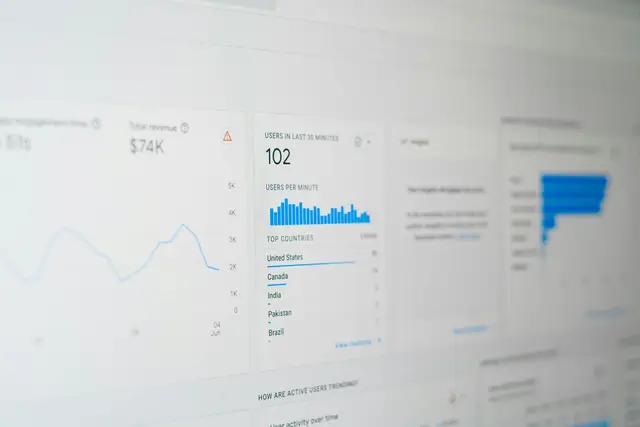
AI referrals. Build a filter in your analytics to catch traffic where the session source or medium contains known AI platform URLs. You want to know how many people are landing on your site because an AI tool directed them there. Even better: if you’re using a CRM, identify contacts who came in through an AI platform. That’s a concrete business signal.
Brand sentiment. Query the major AI platforms directly. Ask them about your brand, your competitors, your category. How do they describe you? What associations are they making? This is qualitative at first, but it tells you whether your content strategy is working before the traffic numbers move.
Prompt volume (tracking how often your brand appears in AI-generated responses across a category) is worth adding eventually, but it requires tooling that’s still maturing, and at the beginning it’s a distraction from the work that actually moves it.
Measuring AEO Success
AEO measurement is genuinely hard right now. The tooling hasn’t caught up to the strategy, and many of the most important signals aren’t surfaced in any dashboard.
Here’s what I actually track:
AI-sourced traffic. Set up a dedicated filter for AI platform referrals in your analytics tool. The common AI platform domains are stable enough to build reliable filters around. Watch for whether this number is growing and which pages are receiving it.
CRM source attribution. Traffic numbers mean more when they convert. The more useful signal is whether new contacts in your CRM are coming from AI platforms. This requires clean UTM discipline and a CRM that respects source attribution, but it’s worth building early.
Brand sentiment. A few free tools make this easier than starting from scratch. HubSpot’s AEO Grader (for transparency, I do work at HubSpot. I like the products, and think the AEO grader is good, and felt that way before I became an employee.), Webflow’s AEO Maturity Model, and Profound’s free AEO audit all give you a structured starting point for understanding how AI platforms currently see your brand. Beyond those, query the platforms directly—search for your brand, your core offering, your competitors—and note what they say. Do this consistently so you can track shifts over time. It’s manual work, but right now it’s the most reliable way to understand where you actually stand.
Prompt volume (eventually). As tooling develops, you’ll be able to track how often your brand appears across AI responses in your category. This is a lagging indicator (it moves slowly and requires consistent content investment), but it’s ultimately the most meaningful AEO metric. Build toward it, but don’t let its absence stop you from starting.
Some closing advice that isn’t exactly AEO related
There is massive value in starting to do something. You will always be inexperienced when you work on something new. What is important to realize now is that doing something in the next six weeks is usually better than doing the “right” or “perfect” thing (whatever that means) in six months.
note: in an effort to be transparent, this blog post was written in a relatively non-traditional way. it was done fully via mobile phone (which honestly feels pretty cool). in a claude code session connected to my portfolio, I had claude interview me based on a draft outline I already had. the interview was then structured into a first pass, and then refined a few times. I’ve done my best to ensure accuracy, but in some ways this is an experiment. if you find inaccuracies, or have thoughts on this process, feel free to drop me a line on linkedin
Written by John Wheeler
← Back to blog